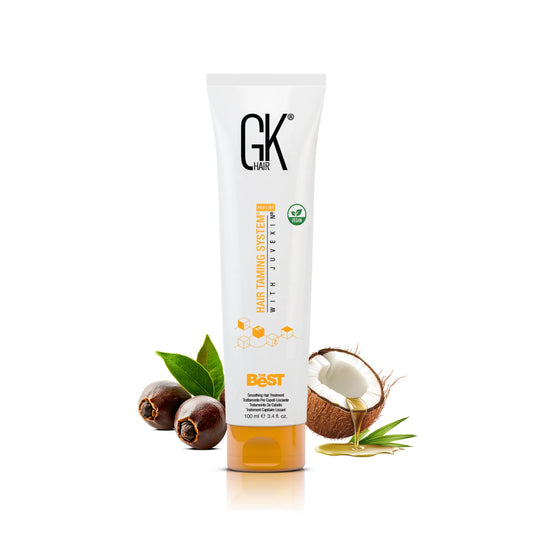
Yes, you can learn how to straighten hair safely using the proper technique and preparation. The bigger problem is generally not the flat iron, but the lack of preparation to shield hair from being exposed to heat. GK Hair stylists use Juvexin V2, our keratin protein complex, all day, every day, throughout 75+ countries. Know your hair type first, because you can only match the method to the right hair type — otherwise it may have the opposite effect on your curls.
Different Ways To Straighten Hair
All you need to know is how to get straight hair without going through tons of trial and error. There are multiple routes to hair straightening, and finding the right one for you depends on your hair texture, how much time you want to spend, and how long you want it to last.
Heat Styling Vs Heat-Free Methods
Flat ironing or blow-drying your hair will provide you with same-day results while allowing you to control your desired finished look. However, heat weakens hair's protein structure over time when used frequently.
Wrap-drying, rollers, and banding eliminate heat damage, but require more time and work best on hair that's already straight or has some wave to it. Let's compare both methods:
- Time: Using a flat iron will take you 20 to 40 minutes. Wrapping or drying with rollers requires from several hours to leaving it overnight.
- Style longevity: Heat-styled hair will usually last one to two days until humidity or sweat is enough to undo your style. Heat-free styles can sometimes last longer if you use the right products.
- Damage: Flat ironing can cause damage to your hair if you don't use a heat protectant. There is a minimal risk of damage when using heat-free methods.
- Hair texture compatibility: Flat irons can be used on all hair textures. Heat-free methods are better suited for straight, wavy, or loose curls.
Professional salon treatments are a completely different thing because they change the structure of your hair on a chemical level, rather than just temporarily altering it. That's why salon treatments maintain their style during humidity and exercise.
How To Straighten Hair With A Flat Iron
Even if you only flat iron hair for special occasions or straighten it every day, a flat iron is still your quickest route to pin-straight hair. Mastering how to use one has less to do with the flat iron and more to do with how you prepare and what you do in between passes.
How To Prepare Hair Before Using A Flat Iron
The key to smooth-as-can-be hair starts with dry hair. Flat ironing wet or damp sections boils the water in the hair shaft and will cause irreparable damage, no matter how much serum you use later.
Begin with our Moisturizing Shampoo and Conditioner (infused with hair repair catalyst Juvexin V2), which our own brand testing has shown reduces frizz and flyaways up to 60%. Best for: all hair types that need sulphate-free cleansing before heat styling without stripping moisture. After that, blow-dry hair smooth with a round brush.
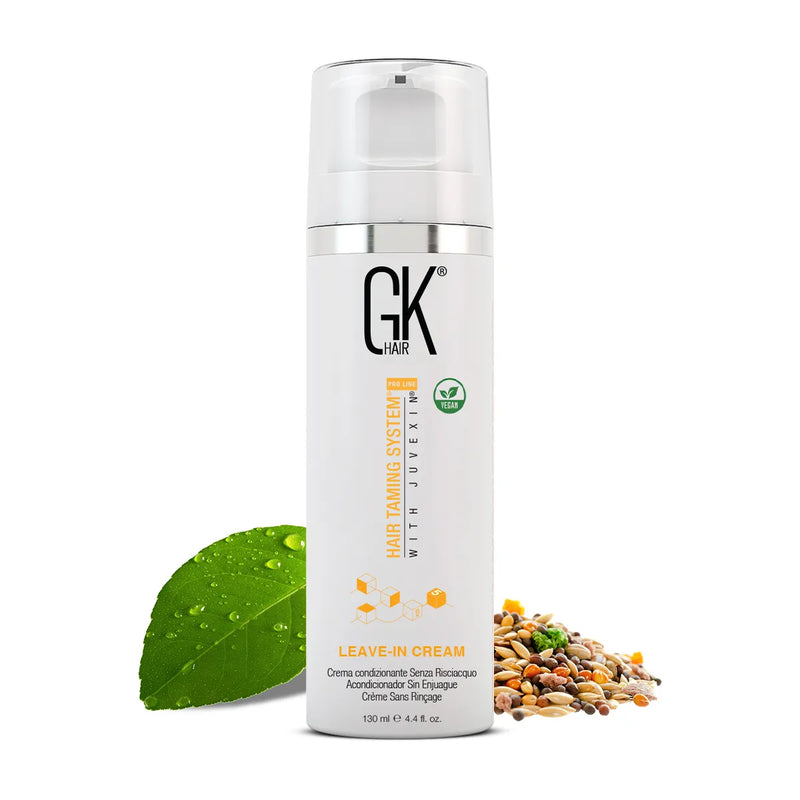
Apply your heat protectant, like our Leave-In Conditioner Cream, from the mid-lengths to the ends before you start flat ironing. Best for those who flat iron more than twice a week: apply it to damp hair from the mid-lengths to the ends before blow drying, then apply a small amount to dry hair again before you flat iron. This is our stylists' go-to for clients who flat iron every day.

Proper Temperature For Different Hair Types
Hair type will decide how high you can go before the cuticle begins to lift and fray. The table below is what our stylists work within the salon:
| Hair Type | Recommended Flat Iron Temperature | Passes Per Section |
|---|---|---|
| Fine or colour-treated | 150–165°C (300–330°F) | 1 pass |
| Medium, normal density | 165–190°C (330–370°F) | 1–2 passes |
| Coarse or very curly | 190–210°C (370–410°F) | 2–3 passes |
| Chemically treated or bleached | 150°C (300°F) or lower | 1 pass, or air-dry straight instead |
Higher numbers won't necessarily give you a better result. Multiple passes with the iron at a lower temperature will protect your hair much more than one pass with the iron on blast. A well-built iron helps here too — our One Control Titanium Flat Iron holds an even plate temperature so you aren't compensating for cold spots with extra passes.

Also consider these ranges as a starting point, since most consumer flat irons run their digital display a few degrees off. So start at the low end and work up if needed, depending on how the hair reacts.
How To Prevent Heat Damage
The three secrets to preventing heat damage are using the lowest setting possible while still being effective, making sure your hair is completely dry before you start flat ironing or curling, and using a protectant every time, without fail.
Even air-drying your hair halfway before blow-drying can decrease the amount of heat your hair takes in one session. Technique is more important than any one product because it is what will determine how much stress is put on the cuticle.
Stylist's Corner
Heat damage builds up over time, so the more times you pass over the same piece of hair, the more damage you're doing to it. That's why dermatologists' advice around heat styling focuses less on heat avoidance and more on avoiding repeated exposure to the same section of hair.
Our stylists do that by dividing hair into four quadrants, clipping each one away, and starting at the neck up so we can ensure we only pass over each section as little as possible.
How To Straighten Hair Without Heat
Looking for how to straighten hair without heat at all? It can be done. It will just take more time and work better on certain textures.
Wrapping Hair Overnight
Hair that is wrap-set is typically twisted when damp and detangled into a low ponytail or pin curl style, then secured flat against the head with a silk scarf or bonnet before sleep. Hair will dry in the position in which it was set.
For most people, this translates to smoother hair with less volume in the morning. For hair that's naturally straight or has a loose wave, this approach yields the best outcome, whereas more defined curls often call for a stronger technique to fully straighten out.
Rollers And Hair Bands
Rollers and hair bands are the least damaging way to learn how to straighten hair naturally because they elongate the hair strand instead of pressing it flat. Divide damp hair into two-inch sections and roll each section onto an oversized roller, starting at the ends and rolling up to the scalp.
Leave the roller in place until the hair is dry. This may take several hours or overnight. Rolling achieves its results along the same principle as banding hair: section hair and wrap from scalp to ends around a soft elastic band. Banding is preferable to rolling for finer hair.
Blow-Drying With Cool Air
Start with a blow-dryer on the cool or no-heat setting and a boar-bristle round brush. This is the next best thing to the question of how to straighten hair without straightener.
Begin with towel-dried hair combed smooth and parted into four sections. Then, take one section at a time and wrap it around the brush. Move the brush down the length of your hair, from root to tip, while the cool air is directed right behind it. Keep the air moving straight down the hair shaft rather than at an angle.
Blow-drying your hair downward smooths the cuticle rather than lifting it. When you've finished this process with all of your hair, it will take you 45–60 minutes. This will take longer than when you use warm air, but it will leave your hair smoother and less frizzy, not necessarily straight.
This technique works best on straight hair or hair that is loosely wavy and just needs some volume and frizz taming. If your hair is tightly coiled or very curly, you will likely need to use a flat iron to get completely straight hair, or use a heatless technique like wrap-setting.
How To Straighten Curly Hair Safely
Curly hair has a different protein and moisture structure than straight or wavy hair. Therefore, knowing how to straighten curly hair safely means slowing down and modifying almost every step above.
Preparing Curly Hair
Curly hair tends to be more porous and dry, so treat yourself to a deep conditioning mask the night before you straighten instead of the morning of. Because curly hair has more space between the cuticle cells, it tends to lose moisture more easily, which is why this step is so important.
Then comb through your hair with a wide-tooth comb while the conditioner is still in. Start at the bottom and work your way up to prevent breaking the hair. Not doing this is the number one mistake people make that causes curly hair to frizz right after straightening.
Step-By-Step Straightening Process
Blow-dry your curly hair on a round brush with medium heat, stretching each section tight as you dry. Each curl needs to be stretched as much as possible when blow-drying, because curls that aren't stretched out before flat-ironing will resist the flat iron later on.
After your hair is dry, divide it into four to six sections and straighten each section with a flat iron heated between 150 and 200°C. Use one or two slow passes with the flat iron instead of three or four quick, repeated passes. Allow each section to cool before moving on or brushing through it. Hair sets itself into place as it cools, not while it is hot.
Post-Straightening Care
Freshly straightened curls are even more susceptible to humidity than straight strands, which is why the anti-frizz practices in this guide are even more crucial. There is one product, however, that you should apply as soon as you step away from the hair dryer.
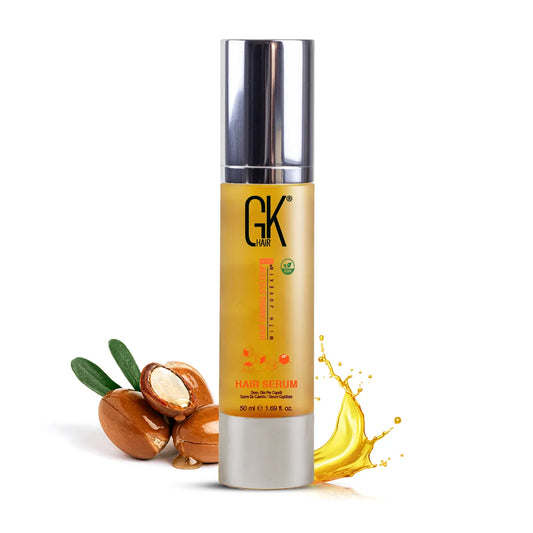
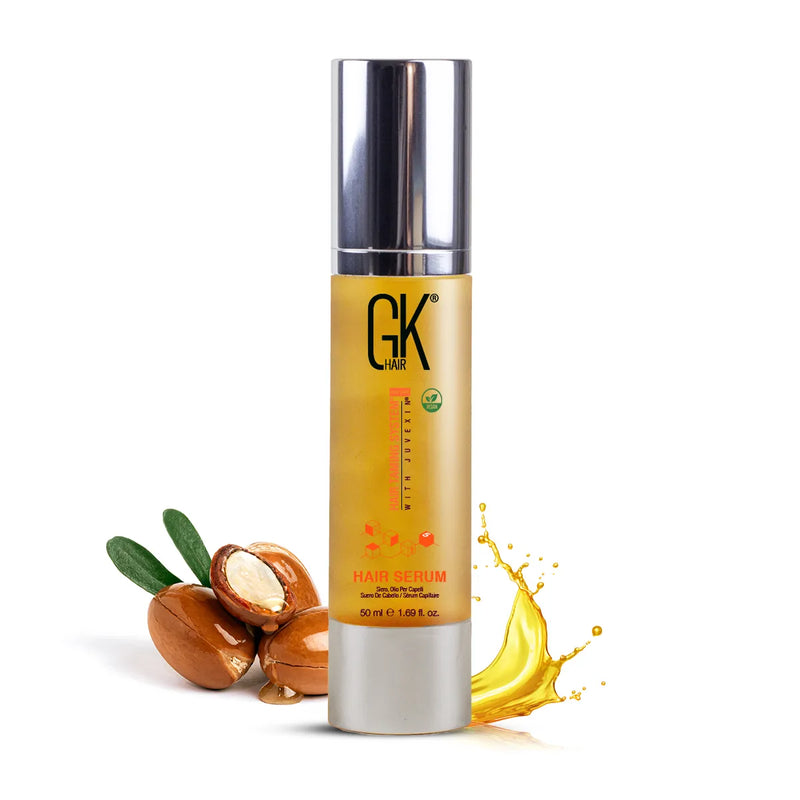
A lightweight serum, such as our Argan Oil Serum, should be applied to dry or damp hair after washing and focused on the ends and mid-lengths. Best for all hair types in need of weightless frizz management and added shine — typically only a dime-size amount is needed for hair that reaches your shoulders.

Common Hair Straightening Mistakes To Avoid
The majority of heat damage is caused by a few common, repeated errors, not just one disastrous hair day. Knowing how to avoid them is what separates having a style that lasts all day from one that heads to the salon for repairs.
Using Too Much Heat
Turning your flat iron all the way up will not straighten your hair quicker or better. It simply increases your chances of burning the cuticle, particularly if you have fine or colour-treated hair that requires no more than 150 to 165°C. Refer to the chart above to gauge what temperature is best for your hair, instead of reaching for the highest setting out of instinct.
Straightening Wet Hair
Passing a flat iron over wet hair traps water between the strands. The boiling causes irreparable damage that can leave your hair with visible split ends or a straw-like texture that no conditioner can fix. Blow-dry hair completely before flat ironing, making sure to check the roots and underside of sections as they dry the slowest.
Skipping Heat Protectant
Heat protectant isn't just an added luxury step. It is what shields your hair from the flat iron's heat entering the hair shaft. If you skip this step even once on clean hair, you can strip away weeks of damage control. Use it on wet hair before blow drying and apply again lightly to dry hair before the flat iron if you have drier hair.
Hair Straightening Treatments Explained
Do you notice that after you straighten curly or very frizzy hair more than twice weekly, you find yourself making one or more of the mistakes above, even with care? Then a professional hair straightening treatment will most likely be more convenient for you and less damaging than heat styling alone.
Keratin Treatment Vs Hair Straightening Treatment
Keratin smoothing treatments fill and coat the hair shaft with protein-based material, eliminating frizz and reducing blow-dry time, but not taking away all of your natural curl pattern. Chemical straightening treatments, such as Japanese thermal reconditioning, permanently eliminate curl by breaking down and reforming the inner bonds of the hair.
Keratin treatments are much gentler and tend to grow out more gracefully, but chemical straighteners will flat-line your hair completely at the cost of greater risk to compromised or previously coloured hair. Read our step-by-step guide to doing a professional keratin treatment at home before you commit to either process, because prep and processing time play as big a role in the result as the actual product used.
Be sure to ask your salon which formula they use before you book your appointment, as the FDA warns that some hair-smoothing products release formaldehyde gas when heated, and not all formulas are created equal.

Temporary Vs Permanent Results
Typically, keratin treatments last between three and five months. The effects gradually wear away as hair grows out and is replaced by new growth.
Chemical relaxers and thermal reconditioning work differently: they are permanent on the hair they treat, and that section never reverts to its natural texture. Only new growth comes in curly, which is why these treatments need root touch-ups rather than a full reapplication.
Neither should be washed for 48 to 72 hours following treatment. Washing prematurely interrupts the bond-setting process before it can fully take effect, essentially negating it. This is exactly what happens if you wash your hair within 48 hours of a keratin treatment.
Who Should Consider Professional Treatments
A professional treatment only makes sense if you're straightening more than twice weekly, if heat styling alone isn't cutting down on your frizz, or if you have coarse or coily hair in humid weather. It doesn't make sense for hair that's already fine or brittle from being bleached or chemically damaged, where additional processing would increase the chances of breakage.
Many of our clients will book a treatment two to three weeks before a wedding, Eid gathering, or special event, which allows the hair time to settle while also having lasting power throughout an entire day of heat. One of our licensed stylists will evaluate the condition of your hair during your consultation, perform a quick strand test and recommend what strength of treatment you need, along with an accurate price estimate.
How To Keep Hair Straight Longer
Straightening hair is easy. Maintaining those sleek strands until your next Dubai blowout appointment is the challenge.
Anti-Frizz Routine
Instead of shampooing daily, wash your hair two to three times a week with a sulphate-free shampoo and conditioner. Washing your hair too frequently strips the natural oils that help minimise frizz.
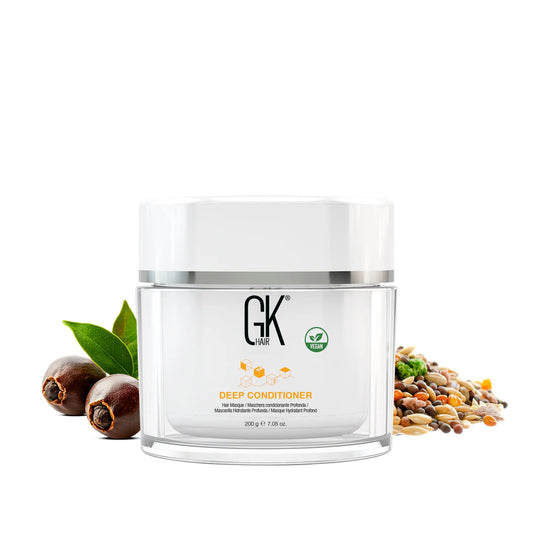
On washing days, apply a leave-in cream to wet hair before blow-drying. Once hair is dry, apply a serum to seal the ends. Additionally, incorporate a weekly deep conditioner to replenish the protein and moisture that is lost with each heat-styling session.
In between wash days, sleep on silk or satin to reduce friction. Try not to touch your hair too much, as the oils from your hands will transfer and cause frizz. Take lukewarm showers instead of hot, since heat causes your cuticle to lift, which promotes frizz.
Also, keep a travel-sized serum or lightweight hairspray on hand for quick touch-ups throughout the day. Hair stylists here in Dubai and Abu Dhabi have mentioned many times that the clients who follow through with the entire method, not just the styling portion, have significantly less frizz buildup between visits.
Products That Help Maintain Straight Hair
In addition to your daily regimen above, stocking your shelf with a heat protectant, lightweight serum, and deep conditioner at all times also ensures you never have to resort to DIY-ing with random leftovers in your shower.
It's also this three-product ritual that is what makes a Dubai keratin treatment last longer through the humidity rather than wearing out in a few weeks.
A Straight-Hair Routine Built For Dubai's Climate
Sleek, straight hair in the UAE is all about understanding how to straighten hair for your particular texture; it's not about one miraculous product. Whether you swear by a flat iron routine, a heat-free wrap, or get keratin-treated before your next wedding, just remember to protect first and style second. Build your routine using our Styling and Protection collection, practice it year-round, and visit your local GK Hair UAE salon to have it customised for your hair.
Frequently Asked Questions (FAQs)
What Is The Healthiest Way To Straighten Hair?
Ideally, you want to use the lowest effective setting, use a quality heat protectant product, and flat iron your hair only two or three times per week. If your hair is already damaged or chemically processed, using heat-free styling options or getting a keratin treatment professionally applied minimises overall damage to the cuticle.
How Often Can You Straighten Your Hair Without Causing Damage?
Most hair types handle flat ironing two to three times a week without harm, provided you always use a heat protectant. The American Academy of Dermatology advises using the least amount of heat necessary and air-drying where possible. Fine, colour-treated or already-dry hair does better at once a week.
Does Straightening Without Heat Really Work?
Yes, but the results are more subtle than using a flat iron and depend largely on your natural texture. Wrap-setting, rollers, and cool-air blow drying can help to dramatically decrease volume and loosen waves if you have straight to wavy hair. Tightly coiled hair typically requires heat or a chemical process to break the curl pattern.
How Do You Straighten Curly Hair Without Damaging It?
Deep condition the night before, then blow-dry under tension with a round brush. Flat iron small sections at 150 to 200°C, using one or two slow passes rather than several quick ones. Curly hair has a more open cuticle than straight hair, so it dries out faster under heat, which is why the prep step matters most.
Which Hair Straightening Treatment Is Best For Long-Lasting Results?
Keratin treatments performed by a professional stylist provide the greatest longevity with the least damage for most clients, lasting between three and five months. Keratin treatments are less damaging than chemical straightening. Chemical straightening will last until your hair grows out, but it is more damaging for weakened or coloured hair.
How Can I Keep My Hair Straight All Day In Humid Weather?
Maintaining the seal of the cuticle immediately after straightening is key. Humidity along the coast of the UAE typically exceeds 80% in the summer months. If you practise the anti-frizz routines listed above, namely the touch-up with serum and avoiding hot showers on styled days, you can expect your style to last all day.
Why Does My Hair Become Frizzy After Straightening?
Hair's tendency to frizz after straightening can often be attributed to humidity penetrating the shaft through lifted or porous cuticles. According to experts, when you're in a humid climate, the outermost layer of your cuticle absorbs moisture from the air, which causes it to swell. That's what your heat protectant and sealing serum are meant to combat.
A Straight-Hair Routine Built for Dubai’s Climate
Sleek, straight hair in the UAE is all about understanding how to straighten hair for your particular texture; it’s not about one miraculous product. Whether you swear by a flat iron routine, a heat-free wrap, or get keratin-treated before your next wedding, just remember to protect first and style second. Build your routine using our styling and heat protection range, practise it year-round, and visit your local GK Hair UAE salon to have it customised for your hair.