A keratin hair mask is an intensive conditioning treatment that carries protein at a higher concentration than a daily conditioner and stays on long enough to act on the fibre. Used weekly it smooths the cuticle, softens rough texture and helps keratin-treated hair hold its smoothing result for longer. This guide covers what a mask does, how to use one, how often, and how to choose the right formula, including why the sulphates in your shampoo undo it between washes.
Keratin-treated hair often feels easier and smoother to style, but the results only last if you care for it properly. Masks are used after professional keratin treatments and are typically left on for anywhere from three to thirty minutes, depending on the formula, before rinsing.
Why Sulphates Shorten a Keratin Treatment
A mask suited to keratin-treated hair carries a higher concentration of conditioning agents than a daily conditioner, stays on long enough to work, and leaves out the sulphates and sodium chloride that lift the coating your treatment sealed in. Your sulphate-free shampoo does the cleansing, your sulfate free keratin hair mask does the conditioning.
Sulphates such as SLS and SLES are strong surfactants used mainly to generate lather, and Healthline notes the main documented risk is irritation to the skin, eyes and scalp. The problem for keratin-treated hair is not safety but cleansing strength.
A keratin treatment deposits protein into the porous gaps along the shaft and seals them with heat, which is the smoothing you paid for. Strong anionic surfactants lift that deposited layer along with the natural oils they are designed to remove, so each sulphate wash returns the fibre a little closer to where it started and leaves it drier and duller.
Benefits of Using a Sulphate-free Hair Mask
Everything a mask does for keratin-treated hair comes back to protecting the seal your treatment left behind. Let's consider some keratin hair mask benefits:
Keeps the Keratin Treatment Intact for Longer
If you're trying to make your keratin treatment last longer, this is one piece of advice. The best hair mask after keratin treatment is one that is sulphate-free. The kind of mask that uses gentler surfactants and rich emollients to supply moisture without stirring the imbalance of keratin and hair pH.
Keratin stays longer on your hair, keeps the shiny look longer for weeks, allows your blow dry to be effective, and resists humidity's effect on your hair.
Across our partner salon network in 75+ countries, stylists report the same pattern: clients who switch to a sulphate-free shampoo and add one weekly masque hold their smoothing results noticeably longer than clients who keep their existing shampoo and simply add the mask. The mask is the easier habit to adopt, but the shampoo swap is what protects it.
Deep Moisture for Dry Hair
Rich moisture matters most if your hair has been bleached, coloured or heat-styled in addition to a keratin treatment service. A quality keratin hair mask is formulated with ingredients like:
- Coconut oil: can help condition the hair and reduce protein loss in some hair types.
- Shea butter: provides rich emollient conditioning, making it useful for dry or coarse strands.
- Argan oil: helps soften the hair and improve shine.
- Peptides and amino acids: can support the feel and appearance of damaged or weakened strands.
- Keratin and hydrolyzed keratin: keratin is a structural protein found in hair, while hydrolyzed keratin is keratin that has been broken down into smaller protein fragments. Some hair masks are hydrolyzed keratin hair masks and your hair may respond beautifully well to it. Across our range, the protein comes from Juvexin V2 rather than the hydrolysed keratin fragments most masks rely on.
You may not see all of these in a single keratin hair mask, but a good formula will carry several. The key ingredients in our Deep Conditioner are listed on its product page, so you can check them against what your own hair actually needs before you buy.
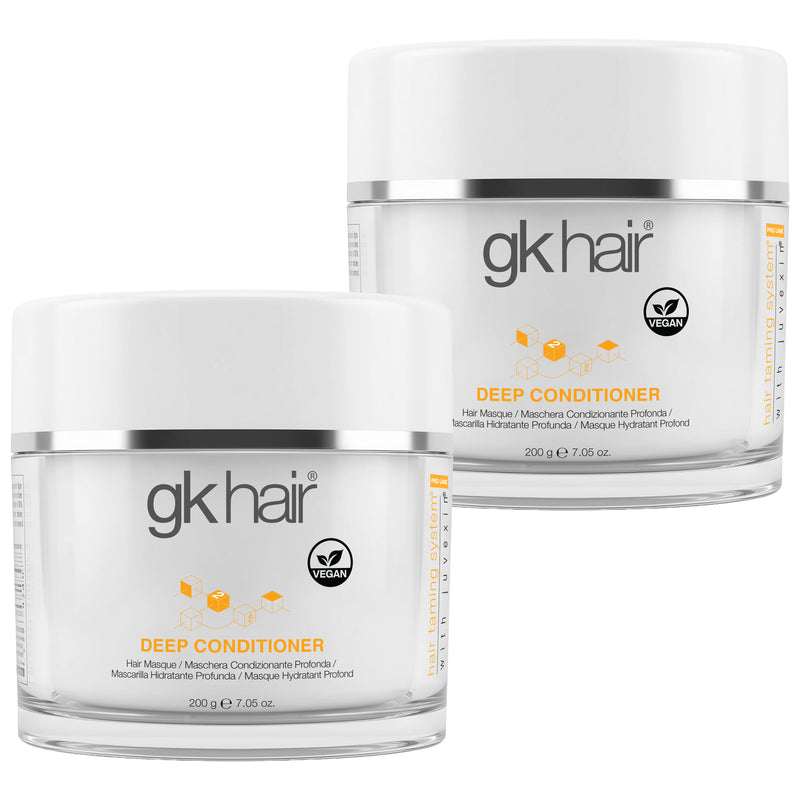
If this is what you're looking for, then try GK Hair's Deep Conditioning Mask. It has ingredients that sink slowly into your hair shaft rather than sitting on top.
Helps Hair Feel Softer and Easier to Detangle
Many people love keratin treatment because of how much easier they're able to manage their hair afterwards. A good mask helps preserve that convenience. Well conditioned hair is easier to detangle and style without much pulling or mechanical stress such as tugging and aggressive brushing.
Stylist's Corner:
Stiffness after a keratin service is usually protein overload rather than damage, and the fix is heat, not more product. Apply your mask to mid-lengths, clip the hair up, and wrap it in a warm towel or a shower cap for the full processing time.
The trapped warmth from your own scalp will lift the cuticle just enough for the conditioning agents to move in, which is why the same mask performs noticeably better under a cap than in open air. We do this on every masque service in the chair; almost nobody does it at home.
You just did a keratin treatment? Read: What Happens If I Wash My Hair 48 Hours After a Keratin Treatment?
How to Use a Keratin Hair Mask Step by Step
Apply a keratin hair mask to freshly washed, towel-damp hair, working from mid-lengths to ends, then leave it on for the time the formula specifies before rinsing with cool water. Damp hair takes up conditioning agents more evenly than soaking-wet hair, and a cool rinse helps the cuticle lie flat as you finish.
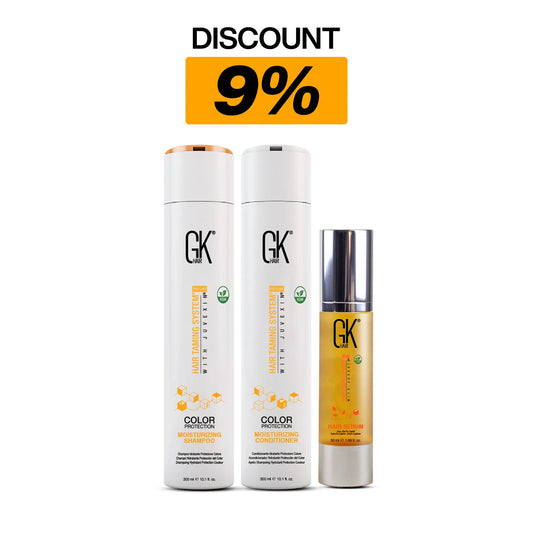
- Wash with a sulphate-free shampoo. Our Moisturizing Shampoo cleanses without lifting the keratin coating.
- Squeeze out excess water. Hair should be damp, not dripping; standing water dilutes the mask.
- Apply from mid-lengths to ends and keep the product off the scalp. Masks condition the shaft, not the roots.
- Comb through with a wide-tooth comb so every strand is coated evenly.
- Leave on for the stated time. Our Deep Conditioner needs twenty minutes; the colour-depositing masques process in three to thirty minutes depending on the formula.
- Rinse thoroughly with cool water until it runs clear.

How to Choose the Best Hair Mask After Keratin Treatment
There are many products on shelves that contain sulphates and other ingredients that behave like sulphates that you should be wary about. Similarly, you do not have to always use a hair keratin mask for keratin treated hair. Let's elaborate on the difference:
A keratin hair mask is a deep conditioning treatment that is enriched with keratin. Just like most GK Hair products, the protein support comes from Juvexin V2. Founded in 2007, we now supply salons in more than 75 countries, and every mask in the range carries the same Juvexin V2 protein used in our professional keratin services.
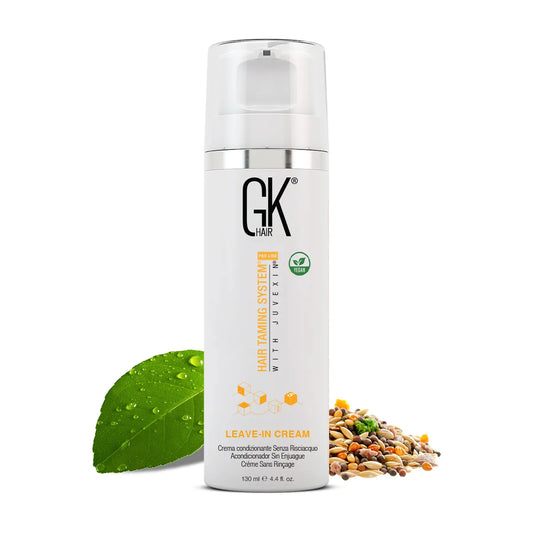
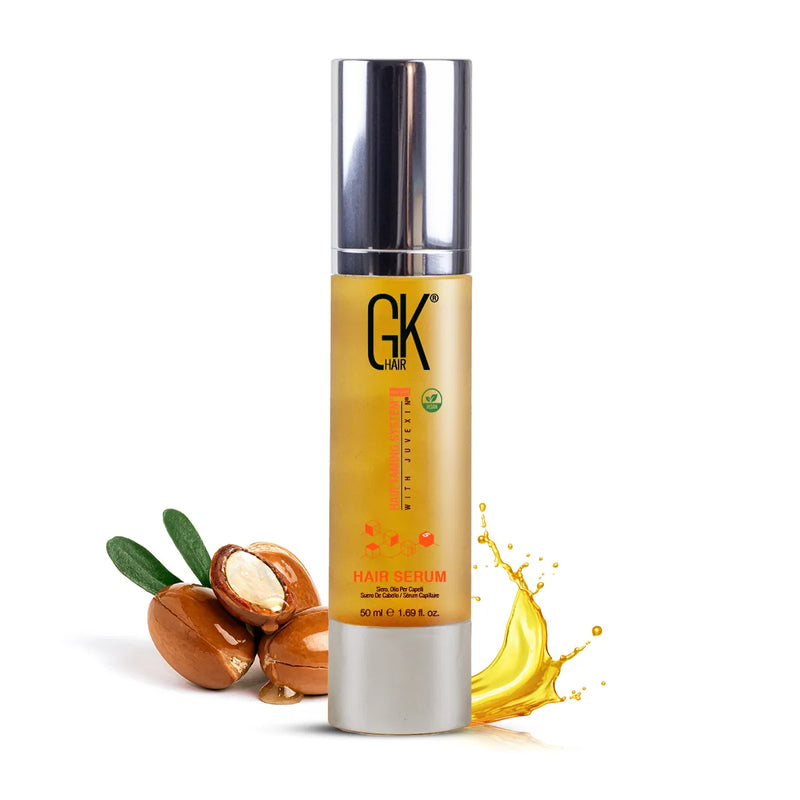
Juvexin V2 runs through most of the range, so protein support is not limited to the masks. A rinse-out treatment such as our Deep Conditioner delivers it over a full processing time, while a finishing product such as the Argan Oil Serum carries it in a lightweight, leave-on form that seals the cuticle and controls frizz between washes. The two do different jobs. The serum is a finisher, not a substitute for a mask.
A mask maintains a treatment; it does not replace one. If you've picked up several hair care products that don't seem to cater to your hair needs, then you need something stronger, deeper and more transformative.
That's what keratin does to individual strands. GK Hair The Best Hair Treatment is more of a therapy than a keratin quick fix. It is built on Juvexin V2, a non-hydrolysed plant-based protein derived from quinoa and pea, optimised to repair and strengthen hair from the inside out. Because it stays intact rather than being broken into fragments, the smaller molecules penetrate the cortex while the larger ones wrap the cuticle.
Best for: frizzy, unruly and dry hair.

So what is the best keratin hair mask?
- If your hair is dry or coarse, look for a richer conditioning formula that's formulated with shea butter and oils.
- If your hair is fine or easily weighed down, choose something lighter and avoid applying a heavy mask directly to your scalp.
- If your hair is bleached or coloured, prioritise moisture and colour-friendly care.
If keratin maintenance is your only concern, check:
-
GK Hair Deep Conditioner
Best for: dry, coarse, rough or chemically processed hairThis is your most preferred choice when your main concern is dryness, roughness or loss of softness after chemical processing. It's an intensive conditioning treatment and supplies moisture where you need it.
If you've combined your keratin treatment with hair colouring, your concern is slightly different. Sulphate-free keratin hair masks for coloured hair should deposit tone and moisture in a single step. Results hold for up to ten washes. They are:
-
Ultra Blonde Bombshell Masque:
Best for: blonde, highlighted or lightened keratin-treated hair.This contains vitamin E and Juvexin and works against brass on blonde hair. It deposits blue-grey pigments that help blonde colour come alive. So, if you've gone very light blonde, you can count on this for your colour maintenance.
-
Hot Bombshell Masque: Best for blonde, silver and highlighted hair that needs both toning and conditioning. Mix 15 ml with about 60 ml of warm water until it turns smooth and creamy, apply to clean damp hair, and leave for five to twenty minutes depending on how much tone you want. Watch the clock rather than the mirror. Left on too long, the formula can leave a temporary cool violet cast.
-
Lock Me Colour Masque: This is a great choice for post colouring. It protects your colour from fading. So, if you want shiny, well moisturised, and damage free hair, get a GK Hair Lock Me Colour Mask. If you mostly heat style, then you need this mask on your shelf.
-
Red Red Bombshell Masque: Best for red and copper tones that have started to dull. Apply to clean and damp hair, massage through, and leave for twenty to thirty minutes before rinsing.
Is a Brazilian Keratin Hair Mask Different?
A Brazilian keratin hair mask is a maintenance mask formulated to extend a Brazilian keratin treatment and not a treatment in itself. The name describes the smoothing service it supports rather than a separate ingredient class, so any sulphate-free protein-conditioning mask will do the same job.
Where masks genuinely differ is in the protein they carry. Most masks rely on hydrolysed keratin, broken into fragments that condition the surface. Ours carry Juvexin V2, a non-hydrolysed quinoa and pea protein that stays intact. So if you've had a Brazilian blowout, select your mask based on its protein and surfactant content, not the popularity of the name.
Common Mistakes to Avoid When Using Hair Mask for Keratin Treated Hair
You must know how to use keratin hair mask after a keratin treatment. Here are some mistakes you shouldn't be making to preserve the results for longer.
Applying It to the Scalp
Hair masks aren't for the scalp. Hence, applying it to your scalp will lead to greasiness and potentially cause irritation. Just like keratin treatment, keratin hair masks are for your shaft, not your scalp.
Pairing a Hair Mask With a Sulphate Shampoo
The American Academy of Dermatology's list of habits that damage hair opens with how you shampoo: massage it into the scalp rather than dragging it through the lengths. Change the cleanser first; the mask cannot outpace a shampoo that strips the coating at every wash.
Doing Hot Showers
You shouldn't ignore water temperature, especially if it goes on your hair. Hot showers can be refreshing after a stressful day, but be mindful of your hair as hot showers trigger the cuticles to open and lose keratin.
Using the Hair Mask Too Frequently
The thing is, overmasking is as bad as not masking at all. What you want for your hair is consistent moisture without throwing your hair off balance. Use your deep conditioner for keratin treated hair once every 7 to 10 days.
Wrap Up
Keratin-treated hair is one of the easiest hair types to care for if you use the right products, and a sulphate-free keratin hair mask is the single product that decides whether your treatment lasts. Browse our hydration and moisturising collection for more products for your keratin-treated hair.
Frequently Asked Questions
What does a keratin hair mask do for your hair?
A keratin hair mask provides intensive conditioning and can improve the feel, softness, smoothness and manageability of the hair. Depending on its formula, it may also contain keratin or hydrolyzed proteins to temporarily condition weak strands.
How do you use a keratin hair mask?
Wash your hair first, gently squeeze out excess water, then apply the mask, prioritising the mid-lengths to the ends. Leave it on for the time recommended by the manufacturer and rinse thoroughly. Avoid applying masks directly to an oily scalp unless the product is designed for scalp use.
How long should I leave a keratin hair mask on?
Follow the time on the product you are using. Our Deep Conditioner needs twenty minutes; the colour-depositing masques process in three to thirty minutes depending on the formula. Longer is not better. Past the stated time the formula stops absorbing and simply sits on the surface of the strand.
Can you use a keratin hair mask every day?
If you're asking how often should you use keratin hair mask, once a week is a reasonable starting point for most hair types. There is no need to use a keratin hair mask every day. Hair that's very dry or damaged may require more frequent conditioning. Fine or oily hair may need less. Just ensure to follow the product descriptions and adjust based on how your hair responds.
Does a keratin hair mask straighten hair?
A keratin hair mask does not permanently straighten hair like a professional keratin treatment does. However, it smoothes the hair cuticle and reduces frizz, which can make hair appear smoother and more manageable. For semi-permanent straightening, you need a professional keratin treatment service in a salon.
Does a keratin hair mask damage hair?
No. A quality sulphate-free keratin hair mask is designed to repair and protect hair, not damage it. But overusing it or leaving it on for too long may cause buildup. Always follow the manufacturer's recommended processing time and use it once every 7 to 10 days for best results.
Can I leave keratin hair mask overnight?
Not unless the product specifically recommends overnight use. Leaving a regular keratin hair masque overnight does not necessarily give you better results and it may even leave your hair feeling heavy or coated. You should follow the manufacturer's recommended processing time for the best results.
Which is better, a hair mask or a keratin treatment?
They do different jobs. A salon keratin treatment resets how your hair behaves for three to five months. A mask conditions the fibre for a few washes and is what keeps that result looking new. Smooth but dry hair needs the mask; frizz returning hours after washing needs the treatment.