Everyone loves a thorough, bubbly, lather filled hairwash — the kind of wash that gives you confidence of smell, dirt and scratch free hair days.
A famous formula, Sodium Laureth Sulphate for hair, is one of the major ingredients that makes hair washing feel so satisfying. It’s responsible for making suds and effective cleansing.
But beyond the foamy lather, the concerns of many are whether SLES is good or bad for hair. Let’s answer that!
SLES: What Is It?
Sodium Laureth Sulphate, also known as Sodium Lauryl Ether Sulphate, is a surfactant used in personal care products such as shampoos, body washes, toothpastes, and hand and dish soaps because of its ability to mix well with oil and dirt, cleanse them, and foam effectively.
Chemically speaking, SLES is derived from the ethoxylation, sulfation and neutralisation of lauryl alcohol. This process produces an anionic compound (SLES) with a negatively charged hydrophilic (water-attracting) head and a hydrophobic (oil-attracting) tail.
What this means is SLES has a structure that allows it to bind with water at one end, and oil (sebum), debris, dirt, and styling product residues on the scalp at the other end, lifting them and making it easier to wash out with water.
Is Sodium Laureth Sulphate Bad for Your Hair?
Your hair type holds the answer to this question. Sodium Laureth Sulphate for hair affects each hair type in a different manner — effective with little or no problems for some, incompatible and not recommended for others.
How to Know Your Hair Type: A Comprehensive Guide is a good starting point if you don’t know your hair type.
Effect of Sodium Laureth Sulphate on Hair
The answer to the question “Is Sodium Laureth Sulphate Bad for Hair?” lies in knowing how your hair responds to it. To know better and make your choice whether to discontinue or keep using, we’ve written down a couple of things about SLES and its love/hate relationship with your hair.
1. Dry Hair
Dry hair has very little natural oil (sebum) and lipids compared to normal healthy hair. This makes it have a rough, brittle like texture that requires constant moisturising to prevent frizz, breakage, and hair damage.
Sodium Lauryl Ether Sulphate has a powerful cleansing ability. It strips the hair of its natural oil, which for a hair type with very little sebum content, leaves it with a deficit.
So, for dry hair, yes! SLES is bad. The hair type depends on retained moisture because its natural lubricant can’t distribute evenly along the hair shaft. SLES, being an aggressive surfactant, removes these surface oils that seal moisture, and makes your hair more porous and thirsty — thirstier even than before.
2. Oily Hair
You’d think that the overproduction of sebum requires a thorough cleansing. It does, as a matter of fact, but there’s a catch.
Oily hair, unlike dry hair, produces loads of oil, an abnormal quantity. If your hair is like this, you’d know exactly why it craves for a deep, lather rich wash. Constant itchiness, a greasy feeling, and discomfort are a few added items to the cart of oily hair.
SLES’ strong detergent property allows it to be easily miscible with product buildups and excess sebum and wash out easily with water. Only a few drops of the sulphate containing shampoo, and you’d feel the weight being washed off your hair.
It’s a good product for oily hair when used properly. However, if SLES is used too frequently or in very high concentrations, it can trigger oiliness again — rebound oiliness.
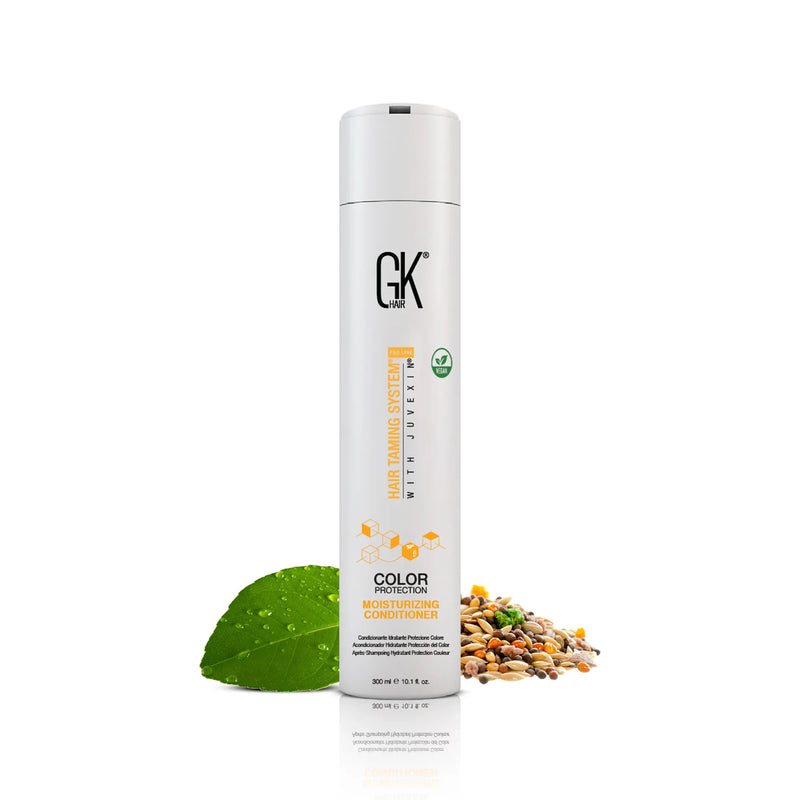
You are advised to use it in moderate concentration and to balance it with a lightweight conditioner on midlengths only. You should add GK Hair Moisturizing Conditioner to your cart, and join numerous lovers in sharing its gospel.

3. Curly and Coily Hair
Though curly and coily hair aren’t completely the same, they both share in their need for moisture. The reason this happens is because, unlike straight hair, which allows easy movement of sebum from the scalp to the hair shafts, these hair types don’t allow easy sebum distribution.
Best Moisture Treatments for Curly and Wavy Hair to Enhance Definition is your best guide to find out the best practices to keep your curls bouncy, soft and shiny.
SLES formulas don’t go well with coily or curly hair, except in very mild concentrations, which must be followed up with intensive conditioning. These formulas tend to make curls drier, increase breakage and frizz, and flatten curl definition when used more often.
4. Straight Hair
Straight hair provides the right surface for sebum to flow from the scalp to hair shafts. Sodium lauryl ether sulphate shampoos do a pretty good job at clarifying.
They are very efficient at removing debris, but you should know that they don’t know the difference between excess oil and the natural protective moisture your hair actually needs.
Using them on straight hair must be in very moderate concentrations, paired with a good aftercare hair system to balance. You must also avoid overwashing so your hair stays in its best condition.
5. Coloured Hair
Sodium laureth sulphate coloured hair looks nothing like the hair that was dyed to create a masterpiece. It looks worn out, faded, and literally a shadow of what it used to be.
Dyes, when applied, sit near or on your hair cuticle. SLES lifts the cuticle, leaving loosely bound dye molecules to be rinsed off. It leaves the colour duller than its first look on you.
Colouring of your hair, which is chemically treating your hair, leaves dyed hair a bit drier than the normal texture. Adding SLES makes it even drier, dull and brittle.
For coloured hair, it’s in your best interest to stay away from SLES and very strong formulas and use colour protected and sulphate free products.
6. Chemically Treated Hair (Perms, Relaxers, Keratin, Bleached)
Your hair proteins, lipids and cuticles are compromised when you go for a perm, keratin treat your hair, or bleach and dye it. Using SLES shampoos causes your hair to have more friction and break badly — worse than unprocessed hair.
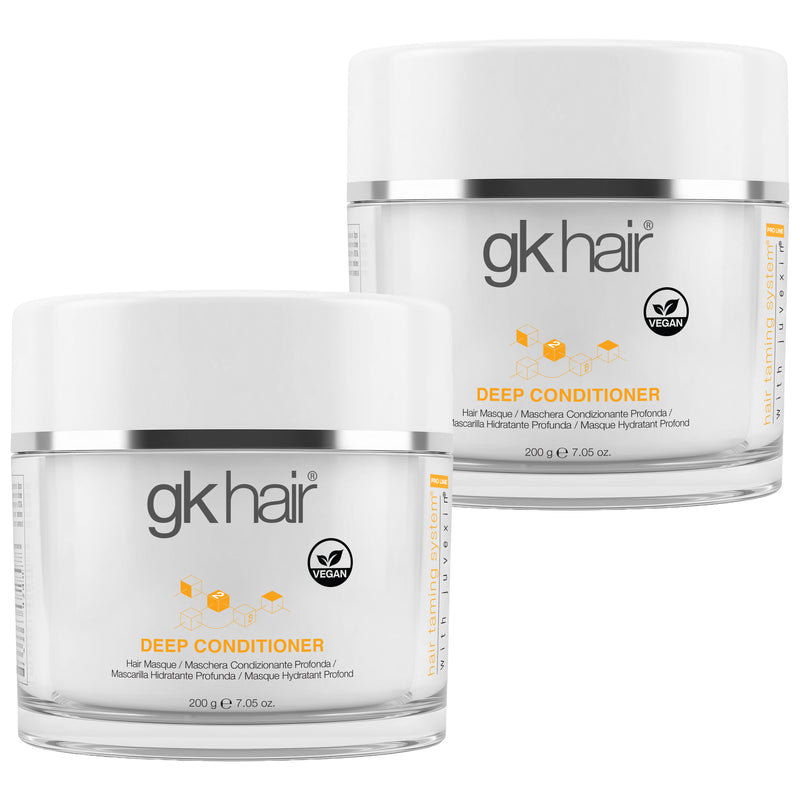
After these kinds of hair treatments, your hair should be provided with food that can nourish it and make up for the damage caused. Protein treatments and bond restoring masks, like GK Hair’s Deep Conditioner Hair Masque, are the better fits.

SLES and Hard Water in the UAE
Hard water is the most abundant water type in the UAE. Hard water makes it very difficult for soaps, detergents and shampoos to lather easily, and so, people use large quantities to create the lather experience they want.
That should be okay if SLES didn’t have a strong detergent property. SLES forms lather in hard water, but slower than in soft water, and it doesn't wash off easily. When you use a quantity larger than what is required, your hair is at risk of damage.
Hard water contains minerals such as calcium and magnesium, which leave deposits in the hair. When SLES strikes such hair, the minerals and leftover SLES salts react together to form buildups over time, leading to drier, more porous, and duller hair.
The Better Option
The quest for deep clarifying and soothing hair washes shouldn't make you settle for products that may be working against your hair behind the scenes.
Sodium laureth sulphate for hair, though it gives a clean wash, doesn’t promise you what specific, unique, colour protected and sulphate free formulas give — a ticket to hair rejuvenation.
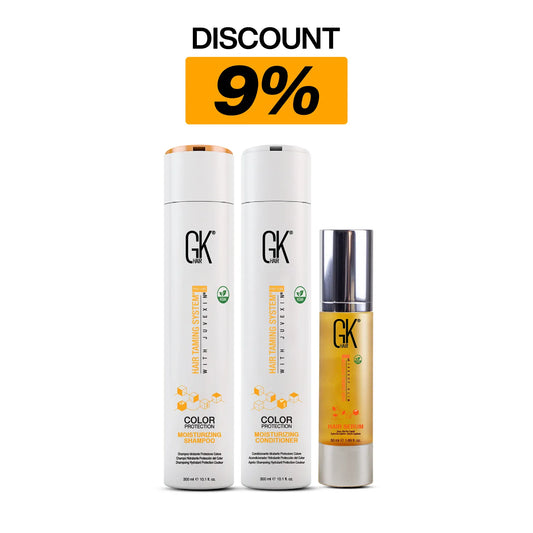
GK Hair Moisturizing Shampoo and Conditioner is the duo pack that offers a warm, suds filled hair wash. It gives your hair a thorough wash makeover, while Juvexin V2 works overtime to repair and strengthen your hair.