Every month, about half an inch is added to your hair’s length. But this growth is barely visible for most people because their ends look warped in tangles or full of split ends. Split ends, when not tackled, climb upwards the length of hair strands to cause more damage. What hair habits bring about those pesky, frayed ends and how can you prevent them from constantly happening and shielding your true hair length? You’re about to find out!
Signs of Split Ends and How to Spot Them
Split ends, technically called trichoptilosis, happen when the protective outer layer of your hair, called the cuticle, wears down and breaks. Think of your hair like a rope. When the protective braiding gets damaged, the inner fibers start to unravel and fray.
The most common sign is the forking of a hair strand into two or more branches that resemble a “V” or “Y”. Most people confuse split ends with hair breakage. Our guide to spotting damaged hair breaks down more signs to watch for, but here's what to check first.
Visible Signs:
-
Your strands split into two (V or Y shaped) or branches out into multiple splits that look like a tree branch.
-
Tiny white dots which indicate when a strand is about to split.
-
Frizz and dullness
-
Thin, wispy ends
Texture and Styling Signs:
-
Your ends feel rough or crunchy.
-
Hair snaps instead of bouncing back when stretched.
-
Your hair keeps tangling in an exact spot after brushing. This shows that your ends are about to split.
-
You notice small, broken pieces of hair on your pillowcase/shoulders constantly.
-
Single strand or fairy knots: These are tight, individual loops in a single strand of hair. They are common in highly textured or curly hair and frequently lead to splits and breakage.
What Causes Split Ends? 5 Common Culprits
Heat styling without using protectants, frequently colouring or bleaching hair, rough handling hair, and a few other habits are the most common causes of hair damage. These habits cause stress to hair, and overtime adds up to cause your ends to fork into two or more splits. Taking notice of them is the first step to preventing and fixing split ends.
1. Heat Styling Without Protection
Every time you use a blowdryer, curling iron, or flat iron without protection, you’re cooking your hair. Heat strips away moisture from the cuticle and leaves hair strands dry, brittle, and prone to splitting.
In the UAE, where ambient temperatures regularly climb past 40°C, frequent hot-tool use without a heat protectant creates close to ideal conditions for this kind of damage.
A heat protectant coats the shaft and creates a barrier, but it has limits — the hotter your tools, the more damage slips through, no matter how good the formula. Coat your hair with a proper heat protectant and keep your hot tools on a lower setting for healthier results.
2. Chemical Treatments and Colour Damage
Chemical treatments, whether perming, bleaching, or colouring, weakens your hair’s protein structure. These treatments work by lifting the cuticle. Once your cuticles are raised, they become more prone to damage.
If you’ve ever gone from dark to blonde, you know how your hair starts to feel straw-like and fragile. This is because the bleaching process has damaged the inner cortex, leaving it vulnerable to splitting.
These treatments aren't the problem on their own — going back for them every few weeks is. The more often you process your hair, the faster the damage compounds.
3. Over-Washing Hair and Using Harsh Shampoos
Washing your hair daily, especially with sulphate-based shampoos strips your hair of its natural protective oils. Sulphates are harsh detergents that create a lot of lather, which makes your hair feel clean but actually damages your cuticle.
When you wash too often with these formulas, your hair never gets the chance to rebuild its protective barrier between washes, leaving strands dry, brittle, and prone to forking. Switching to a sulfate-free formula built for color-treated hair is one of the simplest ways to slow this down.
4. Rough Handling and Brushing Wet Hair
Wet hair is at its most fragile. The cuticle is swollen, the protein bonds are weaker, and the strands are more elastic and prone to snapping.
When you brush wet hair aggressively or wrap it tightly in a towel, you’re creating friction that damages the cuticle.
Similarly, brushing your hair roughly, especially with a fine tooth comb or paddle brush on tangled strands creates micro-tears along your cuticle layer. These are sources of mechanical stress to hair that adds up over time.
5. Moisture loss from Environmental Stress
Our climate in the UAE is very harsh on hair. Low humidity, intense sun exposure, extreme heat, and air conditioning all work together to dry out your strands. Pollution in the air also deposits particles on your hair that buildup and cause damage to your hair.
Even if you’re doing everything else right, if you don’t protect your hair from environmental stressors, you’d keep getting the damage cycle going.
Uncommon Habits that Cause Split Ends
In addition to the common causes of split ends, these unconscious habits also contribute in promoting split ends.
-
Skipping trims when needed: Your ends are the oldest and most fragile parts of your hair. They get damaged easily, and when they’re not trimmed, the damage sprouts upwards.
-
Using blunt scissors to trim: Trims should be done with sharp shears that’d slice through your ends easily, Blunt scissors tears hair, instead of giving a clean cut. This causes your ends to fray and split.
-
Rubbing shampoo throughout your entire hair length when washing.
-
Not using conditioners on your midlengths and ends.
-
Wearing very tight hairdos, ponytail, bun, or braids.
-
Sleeping with wet hair or on cotton pillowcases, instead of silk or satin.
Spotting these habits is the easy part. If you're wondering how to get rid of split ends for good, the seven pro tips below are exactly where to start.
Tip 1: Get Regular Trims
You can't prevent split ends without going in for regular trims. Once a hair strand splits, it continues splitting further up the hair shaft unless you remove it.
Regular trims remove damaged ends and stops the damage from spreading to healthy hair. This makes your hair appear fuller and healthier. You’re not sacrificing length, you’re protecting the length you have.
When you notice your ends are frayed, tangles or snaps easily, your hair is fit for a trim. There is no one fixed time to trim, although most hair professionals recommend every 6-8 weeks. It’s advisable to go to a professional for your regular trims to avoid worsening the split ends by trimming wrongly.
Tip 2: Switch to a Sulphate-Free Shampoo
Your shampoo is the foundation of your hair care routine. In this case, the foundation of your split ends treatment at home.
You should replace your sulphate-based shampoos for moisturizing, sulphate free shampoos which hydrate your strands and prevent dryness.
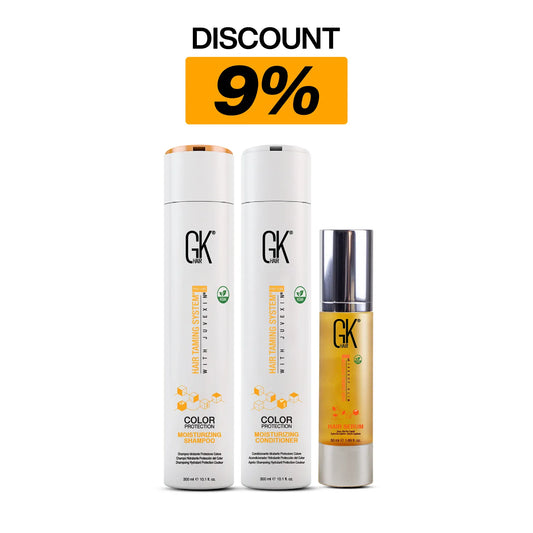
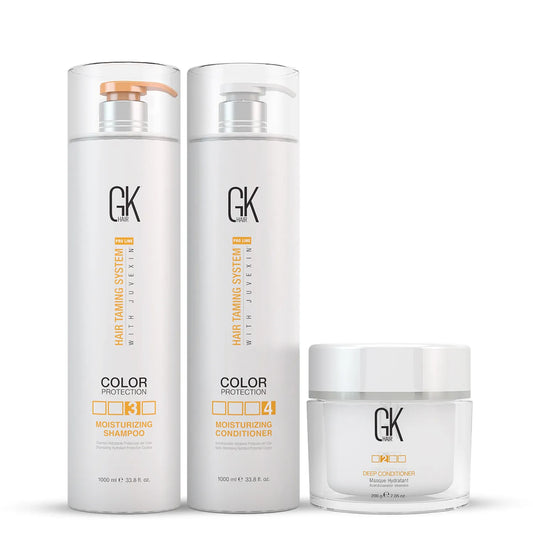
Our GK Hair Moisturizing Shampoo, best for anyone with dry, damaged or colour-treated hair, is formulated to cleanse hair without stripping its protective oils. It contains juvexin, an advanced protein blend that fills in raised cuticles as you wash.
Tip 3: Deep Condition Weekly (Not Monthly)
Doing a deep conditioning treatment shouldn’t be an occasional hair treatment. Your hair loses moisture every day, and you’d need to replenish that moisture consistently to avoid split ends or hair breakage.
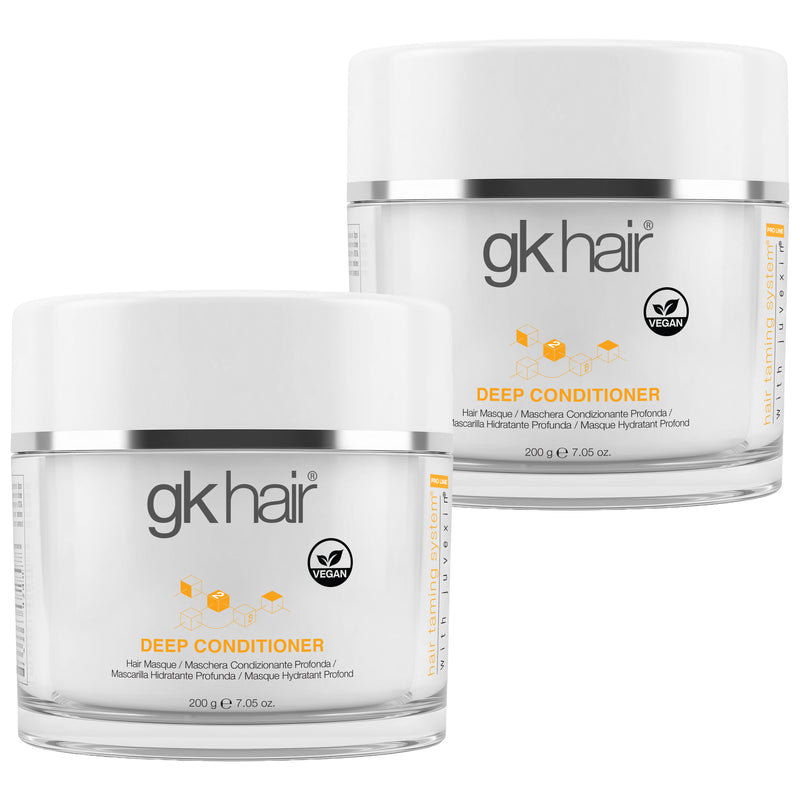
The GK Hair Deep Conditioner is designed to provide intense hydration. Best for all hair types, especially dry or damaged hair, it contains natural seed oils that penetrate the hair shaft and seals the cuticle.

On your wash day every week, after using your shampoo for split ends, apply your deep conditioner to damp hair concentrating on your mid-lengths and ends. Leave it on for 20 minutes, and rinse thoroughly with cool water.
Repeat this every one to two weeks, and watch how split ends disappear.
Tip 4: Use a Heat Protectant Before Heat Styling
Before you reach for your blow dryer or flat iron, you should have your heat protectant. It helps to create a barrier between your hair and the heat, reducing damage.
After applying your ThermalStyleHer Cream to create this barrier, allow it to set, before you lower your heat settings and style your hair. This way, you’re guaranteed minimal damage to your strands.
Tip 5: Be Gentle with Wet Hair (Use a Wide-Tooth Comb)
Wet hair deserves special treatment. Hair is at its most vulnerable state when wet. After shampooing, don’t rub your hair with a regular towel. Instead, gently squeeze out excess water using a microfiber towel or an old soft cotton t-shirt.
Use a wide tooth comb to gently detangle, starting from the ends and working upwards. This combing technique removes tangles without creating the friction that causes splits.
Some split ends that happen along the hair shaft (not just at the tips) come from rough brushing and towel friction. Switch to this method and you'd notice a reduction in breakage within 2-3 weeks.
Tip 6: Leave-In Conditioner for Daily Protection
A leave-in conditioner is like sunscreen for your hair—it provides ongoing protection throughout the day. It seals the cuticle, reduces friction from clothes, and helps your hair retain moisture.
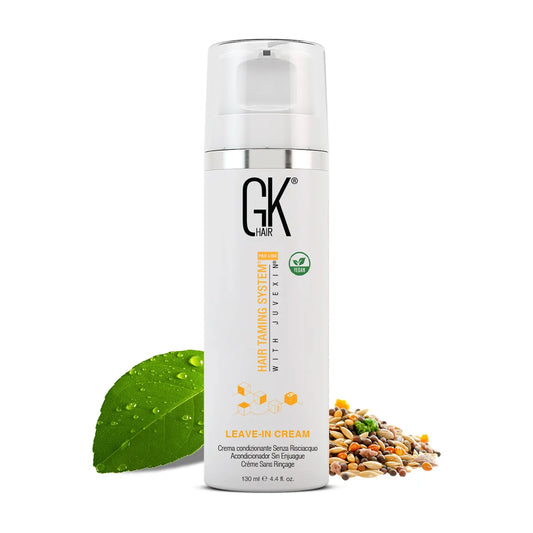
Our Leave-In Conditioner Cream is lightweight and doesn’t weigh hair down. It provides immediate softness and helps to protect your strands from frizz and split ends.
Tip 7: Wash Hair Less Frequently & Sleep on Silk/Satin
Stop washing your hair every day. This single change will reduce your split ends dramatically.
Most people’s hair does fine with 2-3 washes per week. You may notice your hair being greasier initially when you switch from daily washing, but with time, your hair adapts to this right washing frequency and produces the right amount of oil needed to coat and protect your cuticle.
You must also switch your cotton pillowcases for silk and satin. This small change costs about AED 50-100 and reduces the occurrence of split ends. It’s one of the easiest preventative measures you can take.
Stylist’s Corner
After speaking with a hair professional who works with our products regularly, here's what she had to say:
“The biggest mistake people make is thinking one expensive treatment will fix years of damage. It won't. What works is consistency: sulfate-free products, weekly deep conditioning, heat protection, gentle handling, and regular trims. Do those things and split ends almost completely disappear. Most clients who struggle are either over-washing, skipping heat protection, or using products with harsh ingredients.”
Split ends are primarily a prevention problem, not a treatment problem. You can’t repair them permanently, but you can one-hundred percent prevent them.
Do Serums, Bond Treatments and Conditioners Fix Split Ends?
No, serums, bond treatments and conditioners do not permanently fix split ends. Once it occurs, permanent damage has been done to the hair structure and it can’t be fused back. Your hair is a dead tissue that can’t regenerate, so no ‘hold’ product can completely fix it. However, some serums, bond treatments, and leave-in conditioners temporarily smoothen split ends. These treatments work by coating the strands with ingredients that smooth the cuticle, adding weight to frayed ends so they don't show as much, or creating a temporary ‘glue’ effect to hold split sections together.
This is why you notice it returning after you wash your hair. Products can't repair existing splits, but they can prevent new ones and manage the appearance of current splits. The most effective products are: sulphate-free shampoos (they don't strip), deep conditioners with hydrating ingredients, leave-in conditioners, and protective oils or serums. The GK Hair range covers all these categories and delivers real results. What matters is using them consistently!
Conclusion: Stop Split Ends From Stealing Your Length
Split ends can be frustrating, especially when they keep reaching out to ‘colonize’ your healthy strands. They’re a sign that your hair is missing one or more key elements: proper hydration, heat protection, gentle handling, sulphate-free products, or regular good trims. Once you know what’s missing, fixing it becomes straightforward. Our moisture & hydration collection provides you with the products you need to prevent split ends!